
Biological Odour Control vs Chemical Scrubbers: Which Technology Wins?
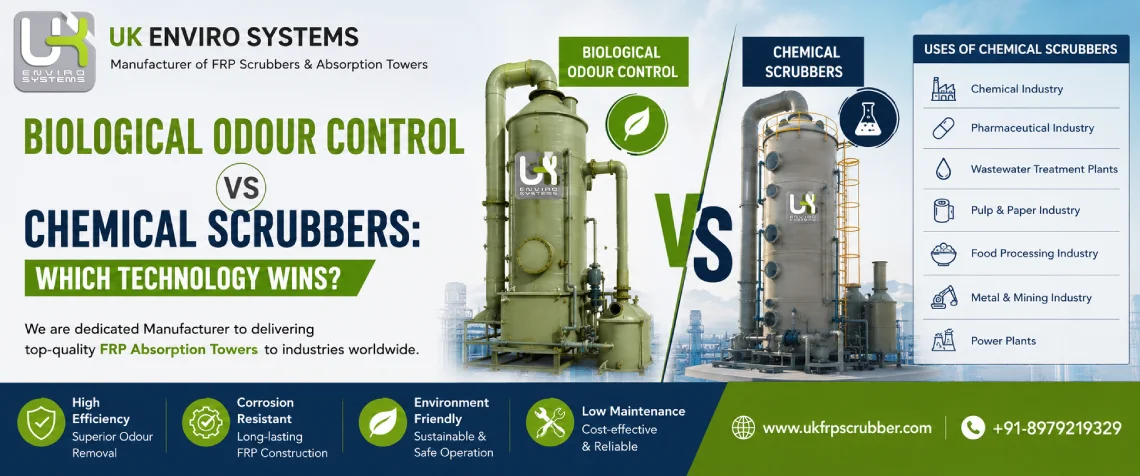
Table of Contents
Togglebiological odour control Vs chemical scrubbers
Foul odours are more than a nuisance. For facilities like wastewater treatment plants, composting sites, food processing units, and industrial manufacturers, uncontrolled odour emissions can trigger community complaints, regulatory penalties, and reputational damage. Two technologies dominate the odour control conversation today: biological odour control and chemical scrubbers. Choosing between them isn’t just a technical decision — it affects operating costs, environmental footprint, and long-term compliance.
This guide breaks down how each system works, where they excel, and how to decide which one fits your facility.
What Is Biological Odour Control?
Biological odour control uses naturally occurring microorganisms to break down odorous compounds — such as hydrogen sulfide (H2S), ammonia, and volatile organic compounds (VOCs) — into harmless byproducts like water, carbon dioxide, and inert salts. Common biological systems include:
- Biofilters – Odorous air passes through a bed of organic media (compost, wood chips, or peat) where bacteria colonize and metabolize the pollutants.
- Biotrickling filters – Similar to biofilters, but with a continuously recirculated liquid layer that keeps the microbial culture active and easier to control.
- Bioscrubbers – Combine a biological reactor with a scrubbing tower, offering higher efficiency for variable or high-concentration odour loads.
These systems mimic natural degradation processes, making them a low-impact, sustainable choice for long-term odour management.
What Are Chemical Scrubbers?
Chemical scrubbers neutralize odours through direct chemical reactions. Contaminated air is drawn through a scrubbing tower where it contacts a liquid reagent — typically sodium hypochlorite, sodium hydroxide, or hydrogen peroxide — that oxidizes or neutralizes the odorous compounds. Chemical scrubbing is well established in industries with high, sudden, or highly toxic odour loads, offering fast and highly controllable results.
Key Differences: Biological vs Chemical Odour Control
1. Treatment Efficiency
Chemical scrubbers generally offer faster, more predictable results for high-concentration or highly toxic gas streams, since the reaction is instant and dosage can be precisely adjusted. Biological systems take time to establish a stable microbial culture, but once mature, they can achieve comparable or even superior removal efficiency for moderate, continuous odour loads — particularly for compounds like H2S and VOCs.
2. Operating Costs
This is where biological odour control usually pulls ahead. Chemical scrubbers require a constant supply of reagents, which means recurring purchase, storage, and handling costs. Prices fluctuate with chemical markets, and usage scales directly with odour load. Biological systems, by contrast, primarily need water, nutrients, and occasional media replacement — resulting in significantly lower long-term operating expenses once installed.
3. Environmental Impact
Biological odour control is inherently more sustainable. It avoids the use of hazardous chemicals, produces no toxic byproducts, and carries a smaller carbon footprint. Chemical scrubbers, while effective, generate spent chemical waste that requires proper treatment or disposal, and improper handling of oxidizing agents like sodium hypochlorite poses safety and environmental risks.
4. Maintenance and Operator Safety
Chemical scrubbers involve handling corrosive or hazardous substances, requiring trained personnel, safety equipment, and strict storage protocols. Biological systems are generally safer to operate day-to-day, though they need regular monitoring of moisture, pH, and nutrient levels to keep the microbial population healthy.
5. Footprint and Installation
Biological systems, especially biofilters, often require more physical space due to the media bed size needed for adequate air contact time. Chemical scrubbers tend to have a more compact footprint, making them attractive for space-constrained industrial sites.
6. Response to Load Variability
Chemical scrubbers respond almost instantly to spikes in odour concentration, since dosing can be ramped up on demand. Biological systems handle steady, continuous loads very well but can be slower to adapt to sudden shock loads, since microbial populations need time to adjust.
Biological Odour Control vs Chemical Scrubbers: Quick Comparison
| Factor | Biological Odour Control | Chemical Scrubbers |
|---|---|---|
| Operating cost | Low (long-term) | Higher (ongoing chemical use) |
| Environmental impact | Minimal, sustainable | Chemical waste generated |
| Response to load spikes | Slower | Fast |
| Safety/handling | Low risk | Requires hazardous chemical handling |
| Footprint | Larger | Compact |
| Maintenance | Biological monitoring | Chemical dosing & storage |
| Best for | Continuous, moderate odour loads | High-concentration, variable loads |
Which One Should You Choose?
There’s no universal winner — the right choice depends on your facility’s odour profile:
- Choose biological odour control: if you’re managing continuous, moderate-strength odours (common in wastewater treatment, composting, and rendering plants) and want a cost-effective, low-maintenance, environmentally friendly long-term solution.
- Choose chemical scrubbers: if your facility experiences high-concentration or highly variable odour spikes, has limited space, or needs rapid, guaranteed control for regulatory compliance.
- Consider a hybrid system — many industrial sites combine both technologies, using a chemical scrubber as a first-stage polishing step for peak loads, followed by a biological system for continuous baseline treatment. This approach balances performance, cost, and sustainability.
Final Thoughts
As environmental regulations tighten and sustainability becomes a bigger factor in facility operations, biological odour control is increasingly favored for its lower lifecycle cost and reduced environmental footprint. However, chemical scrubbers remain indispensable where speed, reliability, and handling of highly toxic or variable gas streams are non-negotiable.
The best approach starts with a proper odour audit — understanding your emission sources, concentration levels, and load patterns — before committing to a single technology or a hybrid solution.
At UK Enviro Systems, we are dedicated to delivering top-quality FRP scrubbers to industries worldwide. Whether you need a robust chemical scrubbing solution, a biological odour control system, or a hybrid setup tailored to your facility’s specific odour profile, our team can help you design and implement the right system for reliable, long-term performance.
Frequently Asked Questions
Yes. Biofilters and biotrickling filters are highly effective at breaking down H2S, often achieving removal efficiencies above 95% for typical concentrations.
Over the long term, yes — chemical scrubbers involve ongoing reagent costs, while biological systems have lower recurring expenses after initial setup.
Absolutely. Hybrid systems are common in industrial settings that need to handle both baseline and peak odour loads efficiently.
Microbial cultures in biofilters typically take a few weeks to fully establish, after which the system reaches optimal treatment efficiency.