
Coal Plant SO2 Showdown: How Scrubbers Slash Acid Rain
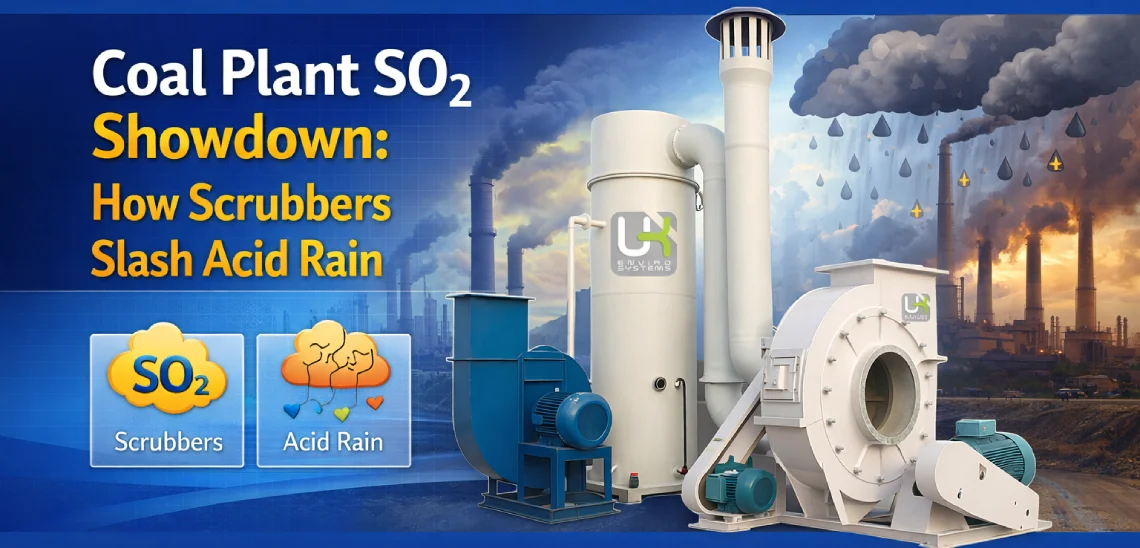
Table of Contents
ToggleFGD Scrubbers in Ghaziabad
For industrial hubs like Ghaziabad, balancing robust energy production with environmental responsibility is a critical challenge. Coal-fired power plants face intense scrutiny due to sulfur dioxide (SO2) emissions, a primary precursor to acid rain. However, advanced technology provides a powerful solution. The strategic implementation of FGD Scrubbers in Ghaziabad represents a decisive victory in this environmental showdown. At UK Enviro Systems, we deliver top-quality industrial scrubbers worldwide. Our systems are engineered to help local plants meet stringent emission norms, protect infrastructure, and ensure a cleaner future. This blog explains how modern Flue Gas Desulfurization (FGD) technology effectively neutralizes SO2, thereby slashing the threat of acid rain.
Understanding the Adversary: SO2 and Acid Rain Formation
Sulfur dioxide is a colorless, pungent gas produced when coal containing sulfur is combusted. Once released into the atmosphere, SO2 undergoes complex chemical reactions. It transforms into sulfuric acid (H2SO4) within clouds. This acidic precipitation then falls to earth as rain, snow, or fog. Consequently, Wet Scrubber for Pollution Control is not a luxury. It is an essential defense mechanism for regional ecosystems and urban infrastructure.
The Local Impact on Ghaziabad and Beyond
Acid rain has far-reaching detrimental effects. It acidifies soil and water bodies, harming agriculture and aquatic life. Furthermore, it accelerates the corrosion of buildings, historical monuments, and industrial equipment. For a major industrial center, uncontrolled SO2 emissions pose significant economic and public health risks. Therefore, deploying effective Fume Extraction Systems for flue gases is a critical operational priority.
The Champion Technology: How FGD Scrubbers Work
Flue Gas Desulfurization (FGD) scrubbers are the undisputed champions in removing SO2. These systems essentially “wash” the flue gases with a reagent slurry. They capture SO2 before it can escape the plant’s stack. Wet Scrubber Manufacturers have refined this process into highly efficient, reliable technology.
The Core Chemical Reaction
In a typical wet FGD system, an alkaline slurry—often limestone or lime—is sprayed into the flue gas stream. The SO2 dissolves and reacts with the slurry. This reaction produces calcium sulfite or sulfate. Essentially, the acidic SO2 is neutralized by the alkaline sorbent. This process creates a removable sludge, thereby eliminating the gas. Packed Bed Scrubber Manufacturers often design units that maximize this gas-liquid contact for superior removal efficiency.
Why Wet FGD Systems Dominate
Wet scrubbers achieve remarkable SO2 removal rates, often exceeding 99%. They are exceptionally effective for high-concentration streams from large coal plants. Moreover, they handle varying load conditions with consistent reliability. For Ghaziabad’s plants seeking compliance with CPCB norms, wet FGD represents the most proven and robust solution available today.
The Material Advantage: FRP in Scrubber Construction
The internal environment of an FGD scrubber is highly corrosive. Acids, moisture, and temperature fluctuations demand specialized construction materials. This is where Fiber Reinforced Plastic (FRP) excels. Partnering with expert FRP Scrubber Manufacturers ensures system longevity and performance.
Corrosion Resistance for Longevity
FRP composites offer innate resistance to sulfuric acid and chlorides present in flue gas. Unlike carbon steel, FRP does not require expensive alloy cladding or frequent lining replacement. It maintains structural integrity for decades under harsh conditions. Therefore, it directly reduces lifecycle costs and unexpected maintenance downtime.
Durability Meets Design Flexibility
FRP is remarkably strong yet lightweight. This allows FRP Scrubber Manufacturers to create large, complex absorber towers and ducts with relative ease. The material also allows for custom fabrication on-site. This flexibility is crucial for retrofit projects in existing plants, a common scenario for FGD Scrubbers in Ghaziabad.
Key Scrubber Designs for Power Plant Applications
Several scrubber designs are employed in FGD systems. Each offers specific advantages for different plant layouts and emission goals.
Packed Bed Scrubbers: Maximizing Contact
Packed bed towers are filled with specialized media. This packing creates a vast surface area for the gas and slurry to interact. Consequently, they provide excellent mass transfer and high removal efficiency in a compact footprint. Packed Bed Scrubber Manufacturers focus on optimizing media design to prevent scaling and clogging.
Spray Tower Scrubbers: The Workhorse Design
The spray tower, or open tower, is a prevalent FGD design. It uses multiple levels of nozzles to spray the reagent slurry directly into the flue gas. This simple, robust design is highly effective and easier to maintain. Most Wet Scrubber Near Me searches for power plant applications will lead to this reliable technology.
Beyond SO2: Additional Benefits of Scrubber Systems
Modern FGD scrubbers deliver valuable co-benefits. They contribute to a broader environmental and operational strategy for any plant.
Particulate Matter and Multipollutant Control
While designed for SO2, wet scrubbers also capture fine particulate matter (PM). Additionally, they can remove other acid gases like hydrochloric (HCl) and hydrofluoric (HF) acids. This multipollutant control makes them a comprehensive Fume Extraction Systems solution. They help plants address multiple compliance parameters with a single installation.
Waste Product Management
The byproduct from limestone-based FGD is gypsum. This gypsum can be commercially sold for wallboard manufacturing. Therefore, a well-managed system transforms a pollutant into a valuable commodity. This circular economy approach offsets operational costs and reduces landfill burden.
Implementing FGD Scrubbers in Ghaziabad: A Strategic Guide
Adopting this technology requires careful planning. For plant managers in the region, a methodical approach ensures a smooth transition and optimal results.
Conducting a Detailed Feasibility Study
First, analyze the specific coal sulfur content and flue gas characteristics. Next, determine the required removal efficiency to meet current and future regulations. Then, evaluate space constraints for retrofitting the system. This study forms the blueprint for selecting the right scrubber type and size.
Selecting the Right Technology Partner
Choosing experienced Wet Scrubber Manufacturers is paramount. Look for partners with direct experience in the power sector and a strong service network. They should offer complete solutions—from design and fabrication to installation and maintenance. Simply searching for a Wet Scrubber Near Me is insufficient; prioritize specialized FGD expertise.
The Future of Clean Coal Technology
FGD scrubber technology continues to evolve. Innovations focus on reducing energy consumption and water usage. Furthermore, integration with carbon capture systems is a growing field. As FRP Scrubber Manufacturers develop new resins and designs, system durability and efficiency will keep improving. Investing in advanced FGD Scrubbers in Ghaziabad today future-proofs plants against tomorrow’s stricter standards.
Conclusion: Securing a Cleaner Industrial Future
The showdown against SO2 emissions is winnable. Advanced FGD scrubbers provide the definitive technology to slash acid rain formation. For coal-based power plants in Ghaziabad and across India, this is a strategic imperative. These systems protect community health, preserve local ecosystems, and ensure regulatory compliance.
Ultimately, implementing a high-efficiency scrubber is a sound investment in sustainability and operational continuity. UK Enviro Systems stands as your dedicated partner in this mission. As leading experts in pollution control, we provide the robust, reliable Fume Extraction Systems that industry demands. Together, we can turn the tide on acid rain and champion a new era of responsible industrial power.