
How Centrifugal Blower Performance Impacts Scrubber Efficiency
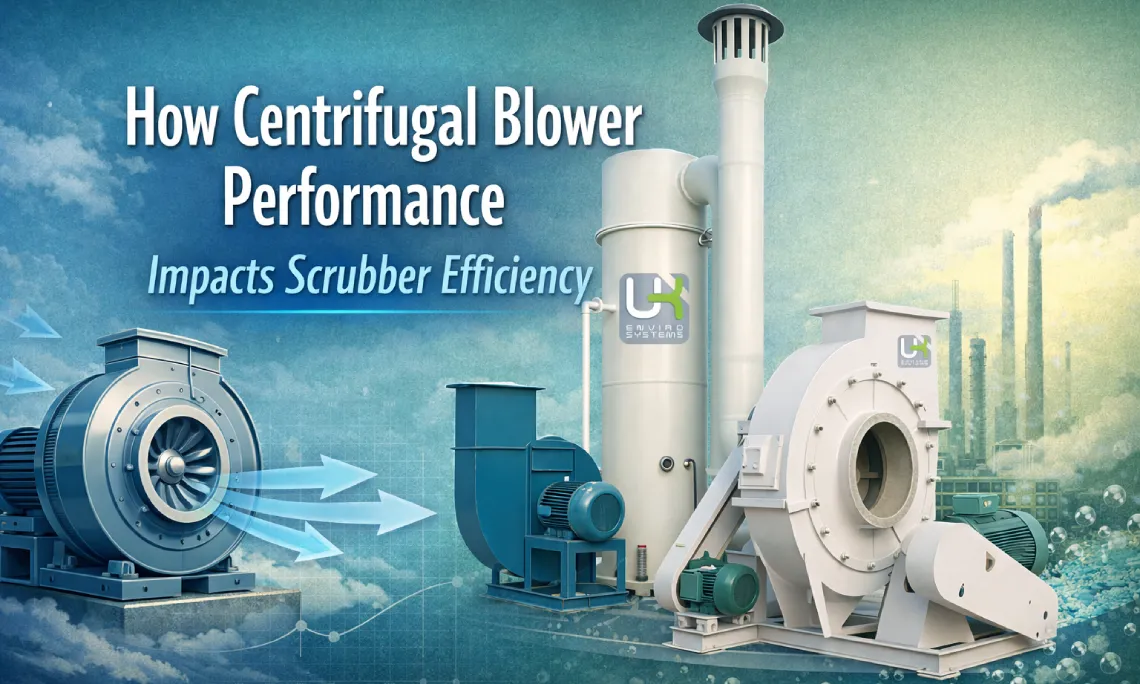
Table of Contents
ToggleWet Scrubbers Efficiency
Achieving optimal Wet Scrubbers Efficiency is a complex engineering challenge. Every component in the system must perform flawlessly. However, the centrifugal blower is arguably the most critical. It acts as the very heart of the pollution control system. This blower creates the necessary airflow and pressure. Consequently, it directly dictates contact between pollutants and the scrubbing liquid. At UK Enviro Systems, we design integrated systems. Therefore, we understand this vital relationship intimately. Selecting the right blower is not an afterthought. It is a fundamental determinant of success.
The Centrifugal Blower: The Heart of the Scrubber System
A wet scrubber relies on intimate gas-liquid contact. This contact removes pollutants through absorption or reaction. The blower provides the motive force for the entire process. It pushes or pulls contaminated air through the system. This includes ducts, the scrubbing vessel, and mist eliminators. The blower’s performance sets the operational envelope. Thus, its selection impacts everything from removal rates to energy costs. Partnering with expert Centrifugal Blower Manufacturers is essential. They ensure the “heart” is strong enough for the duty.
Key Blower Performance Metrics
To understand the impact, we must first define performance. Two parameters are paramount: airflow and static pressure. Their interaction defines the blower’s operating point on its curve.
Airflow Volume: The Capacity Factor
Airflow, measured in cubic meters per hour (m³/hr), is the system’s capacity. It must match the volume of process exhaust requiring treatment. An undersized blower cannot handle the required gas volume. This leads to poor capture at the source. Conversely, an oversized blower wastes tremendous energy. It also can cause liquid carryover and flooding in the scrubber vessel.
Static Pressure: Overcoming System Resistance
Static pressure is the force needed to overcome resistance. The blower must provide this pressure to move air. Every component adds resistance, or “pressure drop.” This includes the scrubber packing, ducts, and mist eliminator. The total system pressure drop is crucial. A blower must generate enough pressure to conquer this sum. Otherwise, airflow will stall and efficiency will plummet.
Direct Impacts on Wet Scrubber Efficiency
Blower performance directly controls three scrubber efficiency pillars. These are gas velocity, contact time, and turbulence.
Governing Gas Velocity and Contact Time
Gas velocity through the scrubber is a critical design parameter. The blower’s airflow rate directly sets this velocity. In a Packed Bed Scrubber Manufacturers design, velocity is especially key. Correct velocity ensures proper gas distribution across the packing. It also determines the crucial gas-liquid contact time. High velocity may reduce contact time, hurting absorption. Low velocity can cause channeling, where gas bypasses the liquid. Both scenarios degrade Wet Scrubber for Pollution Control.
Creating Essential Turbulence and Mixing
Efficient scrubbing requires turbulent mixing. The blower’s energy input helps create this environment. Adequate pressure ensures the gas forces its way through liquid sprays or packing. This action creates fine droplets and intense interfacial contact. This turbulence is where mass transfer happens. Pollutants move from the gas phase into the liquid phase. Without sufficient blower-driven energy, mixing becomes laminar. Consequently, removal rates drop significantly.
Maintaining Design Pressure Drop
The scrubber’s internal components have a design pressure drop. This is essential for their operation. For example, a packed bed needs specific pressure to ensure uniform irrigation. The blower must maintain this delta P across the scrubber. If blower pressure falters, the packed bed will not function correctly. Liquid may not distribute evenly. This immediately reduces the system’s collection efficiency.
The Consequences of Blower Mismatch
Selecting the wrong blower has immediate and costly effects. These impacts go beyond simple performance issues.
Reduced Pollutant Removal Rates
This is the most direct consequence. Insufficient airflow or pressure means pollutants avoid contact. They pass through the system untreated. Your system fails its core compliance and environmental purpose. This risk makes blower selection a legal and operational priority.
Skyrocketing Operational Energy Costs
Blowers are significant energy consumers. An inefficient blower operating off its best efficiency point (BEP) wastes power. This can inflate your electricity bill by thousands annually. Over-sizing is a common culprit for this waste. Proper sizing with expert Centrifugal Blower Manufacturers prevents this.
Increased Maintenance and Downtime
A mismatched blower works under constant stress. It may operate in a surge or stall condition. This causes excessive vibration and heat. Mechanical seals, bearings, and impellers wear out faster. The result is unplanned shutdowns and expensive repairs. Your Wet Scrubber Near Me search should focus on providers who design the whole system. This avoids these costly integration failures.
Selecting the Optimal Centrifugal Blower
Choosing the right blower requires a system-level approach. It is not a standalone component purchase.
Accurate System Curve Analysis
The first step is defining the true system curve. This curve plots pressure drop against airflow for your specific setup. Reputable Wet Scrubber Manufacturers calculate this during design. They consider all elements from hood to stack. The blower must be selected where its performance curve intersects this system curve. This point should be near the blower’s peak efficiency region.
Importance of Fan Laws and Scalability
Fan Laws govern centrifugal blower performance. They relate speed, airflow, pressure, and power. Understanding these laws is vital for system tuning. For example, a small speed reduction greatly cuts power consumption. Experts use these laws to right-size motors and specify variable frequency drives (VFDs). A VFD is a powerful tool. It allows adjustment of blower output to match real-time process conditions. This optimization boosts overall Wet Scrubbers Efficiency dramatically.
The Integral Role of Expert Manufacturers
This complexity underscores the need for an integrated partner. The scrubber and blower must be designed in harmony.
Beyond Component Supply: System Engineering
Leading Centrifugal Blower Manufacturers offer more than hardware. They provide critical application engineering. They review the scrubber design specifications. Then, they recommend a blower that matches the duty point exactly. This collaboration prevents the mismatch pitfalls described earlier. It is the hallmark of a quality supplier.
UK Enviro Systems: Delivering Synergistic Performance
At UK Enviro Systems, we control the entire process. As experienced Wet Scrubber Manufacturers, we design the scrubbing vessel. We also specify the blower as an integral subsystem. Our engineering team calculates the precise system resistance. We then partner with premier blower technology providers. This ensures a perfectly matched, high-efficiency system from the start. We deliver a solution, not just separate components. This is our commitment to clients worldwide.
Conclusion: A Symbiotic Relationship for Peak Performance
In conclusion, centrifugal blower performance is inseparable from scrubber efficiency. The blower is the engine that drives the entire pollution control process. Its airflow and pressure capabilities set the physical conditions for removal. A mismatch directly causes higher emissions, energy waste, and maintenance costs. Therefore, viewing the blower as a commodity is a serious error. It is a precision component that demands expert selection.
For any project, from a simple venturi to a complex Packed Bed Scrubber Manufacturers project, prioritize this relationship. Seek out partners who engineer the blower and scrubber as one unified system. This integrated approach guarantees optimal Wet Scrubber for Pollution Control. It ensures compliance, minimizes total cost of ownership, and delivers the reliability your operation deserves. Remember, the efficiency of your wet scrubber truly breathes with the performance of its blower.